Monday, May 29, 2006

Scotch Pancakes


Scotch pancakes are one of many Scottish cakes cooked on a flat bakestone or girdle (griddle to the English). The Scottish poet Robert Burns described his native land as a 'Land o' Cakes'. He may have meant the oatcake in particular, but 'cake' also meant more generally any form of bread (leavened or unleavened), or cereal-based baked foodstuff. A pancake was a 'cake' cooked on a heated flat-surface; historically a bakestone, hearthstone or girdle, and eventually a pan. Scotch pancakes are also known as 'drop' or 'dropped scones', because soft dollops of mixture are dropped onto the cooking surface. According to Laura Mason, the Scottish are the originators of the scone (a subset of the cake genus), and the 'Scotch pancake' is one of its many forms. I look forward to exploring other members of the Scottish scone family shortly...

The method of cooking on a heated surface is a very ancient one. If you only have a wood or peat fuelled fire for your cooking, it is a simple matter to bury a stone in the embers, or to prop a metal pan over the flames in order to heat the cooking surface. The Welsh have similar girdle-cooked foods of long heritage - such as crempogs (ffroes) and Welsh cakes (The Oxford Companion to Food mentions a theory that the Scottish miners who travelled south to work in the Welsh coal districts of Glamorganshire, were responsible for bringing the girdle pancake recipe with them.). Northern England shared the oatcake with the Scottish Highlands, as both areas were well suited to the cultivation of oats, although different regions prepared the oatcakes in slightly different way.

The 'girdle' used by the Scots for their cooking, is a round, cast-iron flat plate, with a semi-circular handle. The town of Culross in Fife, was granted a royal charter for their manufacture back in 1599 - this gave Culross a monopoly on the production of girdles for many years. The National Trust for Scotland has been working to preserve the town of Culross since the 1930s, so by the 20th century the success of Culross girdles had diminished somewhat. I have not been to the town, but it looks a handsome place.

Scotch Pancakes (recipe from this book)

120g self-raising flour
small pinch salt
30g caster sugar
1 egg
1/4 pint milk

1. First grease your girdle (I love that instruction) - use a oil as butter will burn, and then put on the hob to heat.
2. Sift the flour into a bowl and add the pinch of salt, and then tip in the sugar.
3. Crack the egg into the milk (best not to try doing this into the bottle), and whisk.
4. Pour the egg and milk liquid into the dry ingredients, and mix to form a smooth batter.
5. Test that the girdle is hot enough by putting a teaspoonsworth of batter onto it. You should have a fairy-size pancake cooked for you in less than a minute.
6. For the main-event pancakes, use a tablespoon to drop the batter onto the girdle. I used the back of the spoon to form the dollops into more aesthetic rounds.
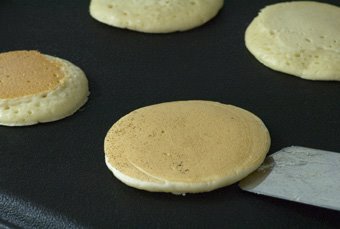
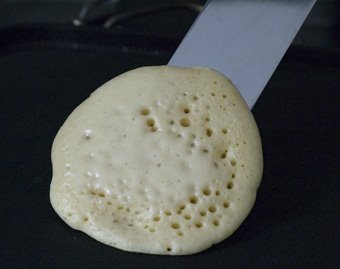
7. Keep a beady eye on the batter. When the surface has become covered in bubbles get ready to flip them over using a palette knife (please ignore the scratchy metal one I am using).


Don't worry if the underside isn't as coloured as you would like it to be, you can always turn the pancake over for an extra girdling.


8. When cooked remove the pancakes from the girdle, and wrap in clean tea towel to keep moist.

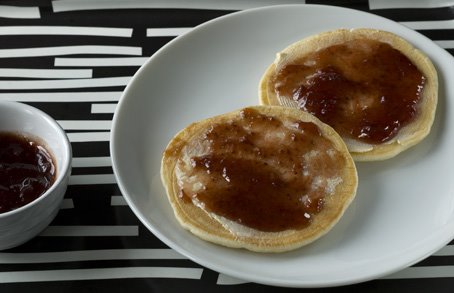
The jury is out on whether to eat these hot from the girdle, or leave them to cool. Either way I think that they should be eaten on the day of cooking. This recipe makes about 18 pancakes, so a good quantity for Sunday night tea for two. Consume with butter, or butter and jam.

Sunday, May 14, 2006

Sticky Toffee Pudding Icecream with Brandy Snaps


I love icecream. I love trying new flavours. One the highlights of our trip last year to Japan was the opportunity to try matcha (green tea), sweet potato, black sesame seed, and sake icecreams. The first icecream of summer is an event of great ceremonial celebration; and if it occurs on an unseasonably glorious day in March, then so much the better. And, isn’t just amazing how at the end of a large meal, a scoop or two of icecream still manages to slither down the hatch…

Inspired by a fabulous idea dreamt up by Rob at Hungry in Hogtown for entry in the recent St. George’s day English pudding event, I just had to make a batch of sticky toffee pudding icecream to try for myself.

Sticky toffee pudding, as Rob discovered, is not a English pudding of great antiquity, but it is a dessert that is well known across the country, and one that features on the menus of eateries from homely hostelries to hoity-toity hotels. I think it deserves the accolade of 'modern classic', and is undoubtably a recipe that will have great longevity. It has an association with the Lake District, as the recipe apparently originated from the kitchens of The Sharrow Bay Hotel, that stands on the shores of Lake Ullswater, Penrith, Cumbria. The hotel was established in 1948 by the late Francis Coulson and Brian Sack. Francis was by all accounts a bit of a genius in the kitchen. He devised the recipe (originally called 'icky-sticky toffee sponge) back in the early 1970s. He was never precious about the recipe, and passed it on to whoever asked for it. However, there does appear to be a rival claim for the pudding from another Cumbrian hotel; the chef of which set up Cartmel Village Shop, in the small town of Cartmel to produce and sell the puddings commercially. If you live in the UK, then you will probably have seen Cartmel Sticky Toffee Puddings in your local supermarket. They are very good indeed.


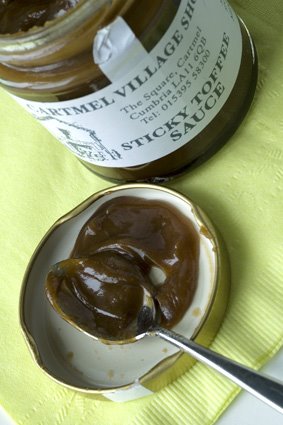
On a cruise around Waitrose I discovered that Cartmel Village Shop also produce a Sticky Toffee Sauce. Made with only sugar, cream, butter and vanilla essence, it tastes as naughty as you might expect. Keep it out of sight, to try and keep it out of mind.

For the purposes of this recipe I bought two Marks and Spencer Sticky Toffee Puddings, as it would have been too distressing to mulch up a Cartmel pudding, and too much effort to make my own simply to use as an icecream base. The M&S puddings come in packs of two individual servings, and the quantity was pretty spot on for Rob's recipe.


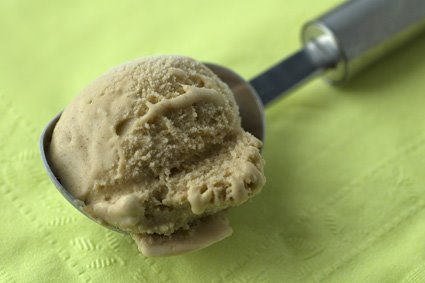
A couple of notes on the making of the icecream - I took the instruction to caramelise the pudding to mean simply heating the broken pudding in its own sugary sauce. I did this over a pretty low heat for about 5-8 minutes. I added the sugar with the milk and cream (think Rob forgot to mention this). The resulting icecream had a intense flavour, but I think (for my tastes) could have benefited from a reduction in the amount of molasses used. The treacley taste was a little overwhelming. However, that aside this was a luxuriant creamy take on an already top-tip pudding.

To set off the smoothly dense icecream I decided make some brandy snaps. Brandy snaps are a form of thin, crunchy, sticky and slightly chewy ginger biscuit, made and consumed across the country. Historically they have come in differing forms, but now they are generally rolled into a tube shape when still warm. The cooled tube can then be filled with cream to serve.

Laura Mason and Dorothy Hartley both classify brandy snaps as wafers - which are thin biscuits made in a wafering iron, with heat applied to top and bottom surfaces of the biscuit. (Click here to see some historical wafers). Mason suggests that wafers (as sweet biscuits) developed from the plain wafers produced in Catholic countries for use celebrating the Eucharist. Now, it seems to me that there is quite a long journey to be made from Communion wafer to brandy snap, so I'll take Ms. Mason's word for this. Alan Davidson in the 'Oxford Companion to Food' describes the biscuits as, 'crisp, lacy baked items which stand on the frontier between biscuits, wafers and sugar confectionery.'


To me this sounds a better summation of what brandy snaps are; I can find no recipe that requires wafer tongs to cook them, instead they are oven baked on a metal sheet. I think that they could be successfully made on a flat griddle, which is perhaps closer to the cooking method used for wafers.

Brandy snaps were sold in Britain as another form of fairing (gingered biscuits were a big winner at country fairs it seems), and they came in many shapes and could be made with sugar, honey or treacle, and from the 1880s - golden syrup. Not all recipes include brandy - it seems that the flavour is not really discernable, so to make cheaper batches of snaps it was left out. Some recipes skip out the ginger too, relying solely on the cooked sugar and butter for flavouring. Don't worry, there will be none of that abstinence in this household. The recipe I followed from Jane Grigson's 'English Food' uses both brandy and ginger, and golden syrup lends its deliciously sticky presence to form the basis of the snap.

Brandy Snaps
(quantities given here make 20-30 biscuits - I used half quantities)

125g butter
125g golden syrup
125g granulated sugar
Pinch salt
125g plain flour
2 teaspoons of ground ginger
1 teaspoon of lemon juice
2 teaspoons of brandy

1. Preheat oven to 200C/400F/Gas 6. Prepare a couple of baking sheets with greaseproof paper.
2. Melt the butter, syrup and sugar in a pan over a low heat. Keep stirring, and once the sugar has dissolved take pan off the heat. Leave the mixture to cool.
3. As soon as the mixture is tepid, add the salt, flour, ginger, lemon and brandy. Mix well.
4. Measure out the mixture using teaspoons. You will need to space the dollops out well, so aim for 6 per baking sheet (you can always do a second batch - I did).
5. Jane suggests baking for 8-10 minutes, but I found this too long and the snaps burnt. By my third go I snatched the baking sheet from the oven immediately as a nice deep golden had been achieved.
6. You can shape the snaps round wooden spoon handles, or a rolling pin, and drape them over the base of a glass to form a basket. Be ready to start shaping not long after the biscuits come out of the oven. They might appear too soft, but as soon as you start to work them the mixture seems to magically harden. Hours of fun.


The brandy snaps went well with the sticky toffee icecream, but I had another batch of icecream in the freezer, also freshly churned this weekend -rhubarb ripple icecream (from an old recipe from Sainsbury's Magazine). I felt a bit mean excluding it from the chance of a moment of glory, so I popped a couple of scoops into the only brandy snap basket that I had managed to make, and stuck in a fan of broken snap.


Who needs crockery? I think that there could be a large market for edible tableware...

Sunday, April 23, 2006

Putting the Feast Back into St. George's Feast Day


So just who was Saint George? Most sources agree that there are very few hard facts known about the man who became the saint; perhaps not surprising as he was supposed to have lived during the 3rd century. Born in Cappadocia (Turkey), he attained high rank within the Roman army under the Emperor Diocletian. Diocletian was a ruthless and bloody-thirsty persecutor of Christians. George was a Christian and stood up to the Emperor, refusing to carry out his commands. He admitted his own faith and was tortured and then put to death - on the 23rd April 303. The story of his bravery and martyrdom quickly spread across Christian Europe. It was the Roman Catholic church that beatified him, but he is also recognised as a saint in the Russian and Greek Orthodox churches.

English soldiers have fought under the spiritual lead of St. George since the first of the Crusades in 1098, when St. George was apparently seen on the battlefield at Antioch, and he helped the Crusaders to win the day. The Crusading knights wore a red cross on a white or silver background to identify them on the battlefield - this ensign became the emblem of the flag England, and was known as the St. George's Cross.

In 1348 King Edward III of England established the Knights of the Garter. The Order of the Garter was dedicated to the Blessed Virgin Mary, Edward the Confessor (the King) and St. George. St. George's chapel in Windsor Castle was built as a chapel for the order. It is believed that it was King Edward the III who declared St. George patron saint of England.

After the battle of Agincourt in 1415, the 23rd of April was declared a national feast day for St. George (and to celebrate victory over the French). As a Catholic saint, this day of feasting fell out of favour after the reformation, which probably accounts for why it has become such an understated event. I trust that a merry band of food bloggers will be able to put the 'feast' back into 'feast day'.

The dragon slaying part of St. George's legend stems from Medieval stories of other battling heroes, and this was given a polish by the Victorians who also liked a good tale of chivalrous daring-do. It is likely that the dragon in the tale is symbolic of the evil persecution of Christians, or alternatively be representative of the Devil. The beautiful damsel is the personification of Christian truth.

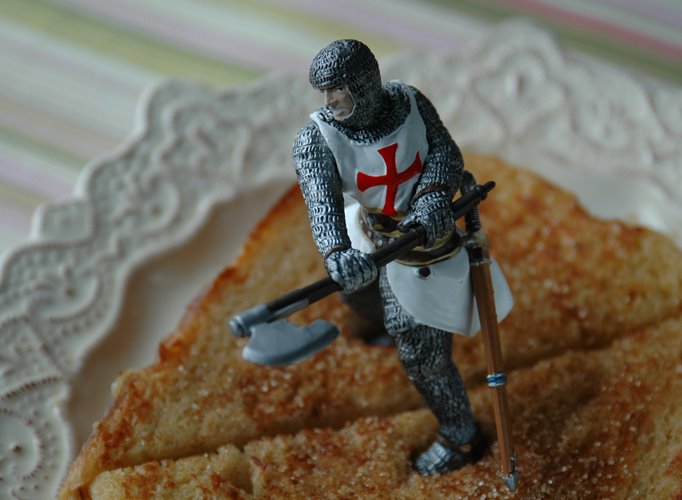
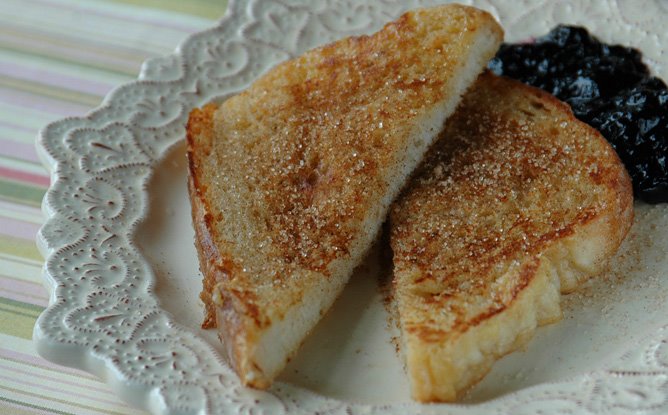
So what to cook to mark St. George's Day? As a soldier, and as a 'leader' of English knights, I thought that the pudding dish 'Poor Knights of Windsor' might be an apt choice for our man George. The dish consists of slices of bread soaked in sherry, milk and sugar, dipped in egg yolk and fried in butter. Served with cinnamon powder mixed with a little sugar, and jam if you're feeling indulgent, this is a 'poor man's' pudding - no rich egg custard, pastry, or serious quantities of sugar went into the making of it. The real-life Poor Knights of Windsor were impoverished military veterans, nominated by members of the Order of the Garter, who were given accomodation and provisions by Windsor Castle. They are now known as the 'Military Knights of Windsor'. Unfortunately nobody seems to know why the dish has the name it has, nor what association it might have with retired soldiers, but it is nice to imagine a rusty swordsman or two tucking into a slice of Poors Knights, talking about the old days and fair maidens that once they wooed.

My recipe came from here.


Use your best knife to cleft the bread in twain.


I am not a big fan of eggy bread (too eggy), but this was much more delicate, soft and delicious. The cinnamon sugar reminded me how much I used to like cinnamon toast once upon a time (another English tea-time classic). I used organic white bread - fresh not stale. In 'English Food' Jane Grigson suggests slices of brioche, which I can imagine would be perfect taste-wise, but rather too French for use today. A perfect indulgent Sunday breakfast/brunch or tea-time treat.

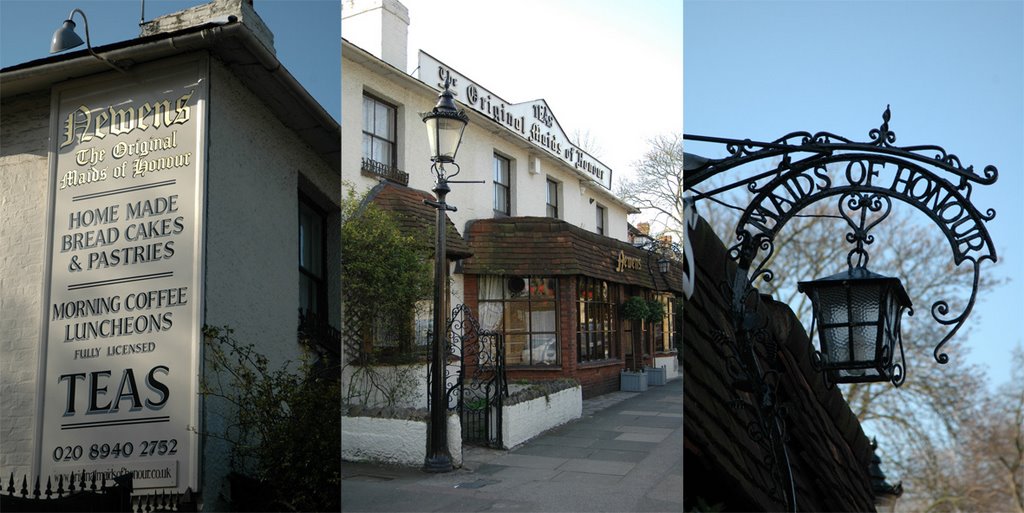
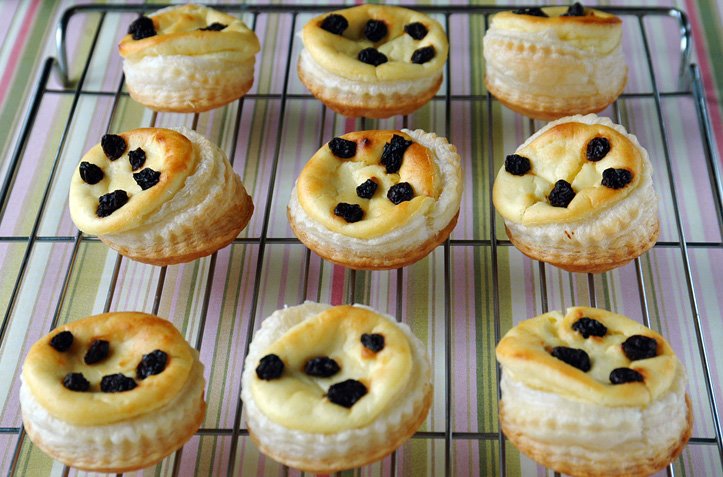
And to keep my Poor Knights company, what better than a few Maids of Honour? These are sweet curd cheese pastries that also have an royal association, this time with that great lover of tarts - Henry VIII. Anne Boleyn naturally also had a hand in this, as it was during the time that she served as a Lady-in-Waiting that Henry developed a taste for Maids of Honour (or very little). Click here for a little more history. The original recipe is associated with Hampton Court, and nearby Richmond-upon-Thames. The Richmond bakery purporting to be the Original Shop of Maids of Honour closed in the 1950s, but on the road that leads from Richmond to Kew Bridge is the shop of the Newens family, where Maids of Honour are still baked and sold.


I made a detour enroute to work to photograph the Newens tea room, so I have yet to sample the 'Original Maids of Honour', but I might make another trip there next weekend as a birthday treat for myself.

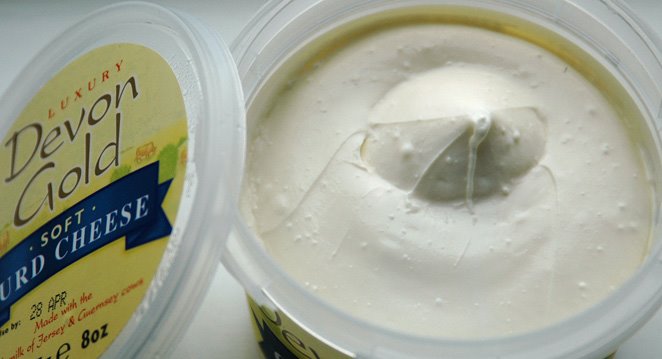
The 'Original' recipe, and that followed by the Newens tea room is, of course, top secret. Instead I followed the second recipe on page 2 of this article. Rather than make junket, I bought some curd cheese from Waitrose, Devon Gold cheese made from milk of Jersey and Guernsey cows. I'd never seen curd cheese before, so thought it worth an image. The cheese looks very like thick double cream, but has a sour taste.


When my Maids went into the oven they quickly proved to be blowsy madams, with their skirts puffing up almost to neck height. Perhaps I should have pricked the bases of the tarts? Upon cooling they sunk back down a little, regaining modesty (although some were still a little giddy as you can see).


My Maids were bite-size ladies. Very light and delicately flavoured companions for my Knights. I think that they got on rather well. The lemon zest in with the curd cheese gave the filling a flavour similar to lemon curd, yet subtler. I came across a recipe by Delia Smith that includes lemon curd along with the cheese, that would give a much more powerful hit of lemon and sugar - maybe too overwhelming? I will have to try it and see. A cook's work is never done...

Five Maids-in-Waiting (to be eaten).


Happy St. George's Day!

and

Friday, April 14, 2006

Good Eating on Good Friday - Hot Cross Buns


'Happiness is a warm bun', as I believe John Lennon might have once said. He might also have written, 'make loaves not war'. So I think that he and I would be in agreement over the pleasures of a hot cross bun. In fact you would have to be something of a puritanal killjoy to issue a statement of 'ban the bun' (and bun puns), but this is what Oliver Cromwell did after he took power. One minute he was chopping off the head of a monarch, and the next vetoeing the simple pleasure of a sweet fruit bun. Sometimes that man just went too far.

Fortunately now normal service has been resumed, and I feel it is pretty likely that many of you will be enjoying a bun or two over the Easter weekend. As you eat and savour, please consider the ancient history and the mysterious powers said to be embued in your average humble hot cross bun.

The most obvious association that the hot cross bun has is with the Christian church, and the story of the crucifixtion of Jesus Christ. The cross on top of the bun is seen to represent the crucifix, but is also a celebration of the resurrection. However, the hot cross bun also has links with much older religions. Ancient Greek and Egyptian bakers cooked up buns at a similar time of year to celebrate the coming of Spring. Anglo-Saxon Pagans worshipped a goddess by the name of Eostre, who was their Goddess of Spring (if you type Eostre into Google, you will find one sponsored link - to Cadburys and their Easter eggs. Someone at the chocolate factory is obviously seeking to appeal to the intellectual and New Age Pagan consumer). The Saxons in their worship of Eostre would consume a round bun (symbolic of the moon), that was marked into four quarters (either representative of the phases of the moon, or symbolic of the sun). It was the Pagan celebration of Eostre that gave its name to the Christian festival, as with a sleight of hand one became the other.

Legend has it that it was a monk at St. Albans abbey who converted the cross topped bun to the Christian church. In 1361 Father Thomas Rocliffe baked spiced fruit buns, marked them with a cross and distributed them to the poor. Some sources claim the dough used was also used for the communion wafer, and as it had been consecrated this was why the buns bore the mark of the cross. It was the presumed sanctity of the dough that may have given rise to another bun tale, namely that buns baked on Good Friday (the Friday before Easter Sunday) would not grow stale nor become mouldy. It also may account for the fact that hot cross buns were thought to be capable of curing certain illnesses; that sailors took them to sea to protect against shipwreck; and that farmers believed they could keep the rats from their grain (acting as a distraction device I can see how this one might work).

I baked my hot cross buns to Dan Lepard's recipe from March issue of Waitrose Food Illustrated. The results tasted worthy of a Beatles' lyric, but I did have a little trouble in the making of them. Any advice gratefully received.

The thing about any home bread-making is that at first glance a recipe may look like a lot of time-consuming faff; but if you tot up the total time spent in the kitchen, it only actually involves about half an hour's work. OK, the rising part of the process may take 15 hours, but you are unlikely to spend that time sitting watching the bowl. Go out and enjoy life.

I started by weighing out and assembling the ingredients during commercial breaks the night before baking. I then went to bed for a night dreaming of warm buns(!). In the morning I got up and went to the hairdresser, and then came back and examined my dough. I had left the dough for a slow rise in the fridge, and although it had definitely changed in appearance from when I had popped it in 10 hours previous, it looked nothing like any previous bread dough I had made. The dough had been very wet and although the moisture had been absorbed, the rise was rather limited. I followed Dan Lepard's method of dividing the dough, and then repeatedly folding each piece (rather than kneading). The dough was very cold, and it felt quite solid and heavy rather than elastic. Perhaps the dough should have been left to come to room temperature?

I then left my dough buns to rise again. Off I popped to the shops to buy the ingredients for lunch (chicken and lime soup). When I came back I had another moment of worry as the buns hadn't got any larger. I put the trays next to the hob as I prepared the soup and this did seem to perk the buns up a bit. On went the flour and water paste cross (quite difficult to get the consistency right), and then into the oven.


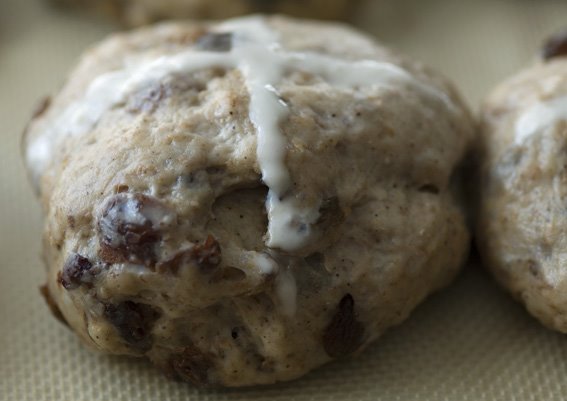
I thought that the initial stage of baking might encourage a final swelling, but nope. Still, the smells coming from the oven were suitably spicey and hunger inducing. When the buns were done I glazed them - which really does finish the appearance of them off very nicely, although my crosses were a little difficult to make out.


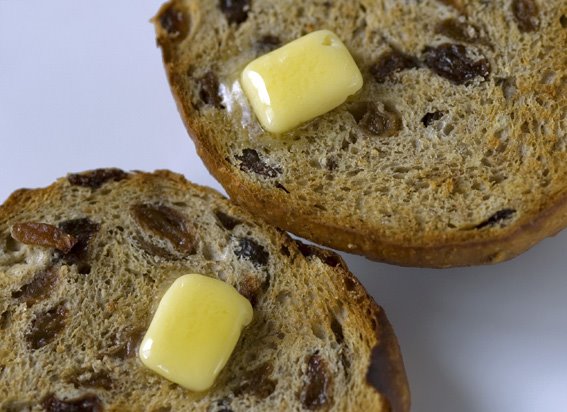
The finished buns were dense but the consistency was perfectly OK. See top picture for a cross-section. I toasted a bun and topped each half with some beautiful Cornish butter - the flavour of the buns was superb. Happy Easter and welcome Spring!


One last story - In the East End of London there is a pub called The Widow's Son. In a cottage that stood where the pub is today, lived a widow whose son was a sailor. The son was due to return home from sea one Easter Friday, and his mother had set about baking his favourite treat - hot cross buns. Sadly her son's boat never returned to safe harbour, and the hot cross buns lay uneaten. Each year on Easter Friday his mother would bake another batch of buns, and would set one aside for her boy. The cottage became known as 'The Bun House',and when it was in 1848 demolished and a pub built in its place, the widow's tale lived on in the pub's name. Each year on Good Friday there is a ceremony within the pub, and a sailor will add another bun to a net of them hanging from the pub's beamed ceiling, before raising a glass or two to the Widow's son.

Thursday, April 06, 2006

Sedgemoor Easter Cakes, Somerset


Easter biscuits are made across Britain and are so ubiquitous that Marks & Spencer sell them as part of their seasonal fare (see below). Traditionally they are served after church on Easter Sunday, and are presented in a bundle of three biscuits to represent the Holy Trinity. They are eaten alongside hot cross buns, simnel cake and copious quantities of chocolate eggs as part of our Easter festivities. The feasting comes at the end of Lent, so the taste of rich foods is supposed to come as a treat. Similar biscuits eaten before Lent commences are known as Lenten biscuits, and are made to use up eggs, sugar etc. in the way that the Shrove Tuesday pancake does.

The West Country (from Gloucestershire, Avon, Wiltshire and Dorset westwards) has an association with Easter biscuit recipes, but my reading turned up more country-wide variations than there are days in Lent, so I think that this is one of those recipes with a central 'theme', but for which there are unlimited variations. The theme is spice and fruit. All Easter biscuits are spiced, either through a small addition of mixed spice or ground cinnamon. The fruit is either solely currants, or can be currants with a little mixed peel. Some recipes use grated lemon zest for extra zing. Biscuits made commercially may have oil of cassia added. Cassia is a part of the same (laurel) family as the cinnamon that you can pick up in the supermarket. It has a similar but stronger and more bitter flavour. An Bristol educated, Australian resident writes of making Easter biscuits at catering college in Bristol, that had oil of cassia as a flavouring. A quick scout around the net reveals it to be an ingredient you can pick up through retailers that stock essential oils etc. (should you wish to try it). I also found one commercial bakery that uses it as a flavouring, and proclaims the fact.

My recipe is from 'Good Things in England', edited by Florence White. This book first published in 1932 was in Florence's words, '...an attempt to capture the charm of England's cookery before it is completely crushed out of existence.' The book documents in recipe form traditional and regional dishes from all corners of the country. A similar study was made of Scottish food by F. Marian NcNeill in 1929 (I have yet to learn of a similar text covering Welsh food).

The post-war years encouraged a certain amount of introspection and a re-evaluation of English culture, but were also a forward looking age, and a generation that saw foreign culture as something to be experimented with and explored. Florence White did not seek to exclude the modern, but wished to record the riches of England's larder, and to talk with the people who were still preparing dishes with ancient credentials, and to ensure that such recipes were documented for future generations (such as ours - Florence, this posting is for you). The flypiece to the book reads, 'A Practical Cookery Book for Everyday Use. Containing Traditional and Regional Recipes suited to Modern Tastes contributed by English Men and Women between 1399 and 1932.'

Florence White set up the English Folk Association in 1931, and in the January of that year was held the first English Folk Cookery Exhibition in Kensington, London. My recipe for Easter biscuits was supplied for this exhibition by Mrs. Wyatt of Huish Episcopi, Somerset. Sedgemoor is a coastal region of Somerset, firmly in the 'West Country'.

Sedgemoor Easter Cakes (yep, biscuits can also be cakes)

225g plain flour
110g butter
110g caster sugar
110g currants
1/2 tsp mixed spice
1/2 tsp ground cinnamon
1 egg
2 tbsp brandy

1. Preheat oven to 180C/350F/Gas 4. Prepare two baking sheets.
2. Rub the butter into the flour.
3. Add the sugar, currants, spice and the cinnamon.
4. Beat the egg and mix with the brandy - add to the dry ingredients ands stir until well incorporated.
5. Roll out about 1/2 inch/1cm thick, and cut into rounds.
6. Bake for about 20 minutes until golden brown.

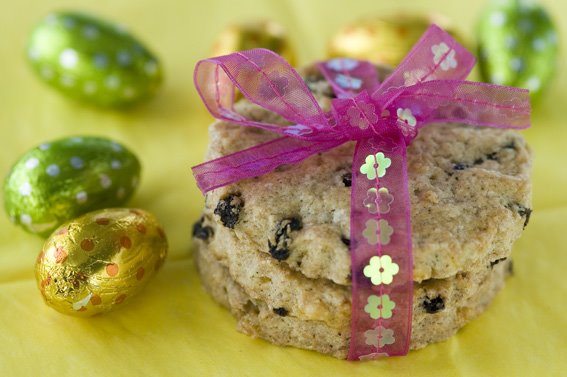
There was no instruction to glaze with egg white and sprinkle with sugar, which most other recipes suggested. I thought that by doing so the finished biscuits might have looked a bit more appetising. They tasted rather fine, but the surface of them was very matt and had large dimples. However, on a closer examination of Marks & Spencer's efforts, I saw that their biscuits were identical in colour, also had large dimples, and although were speckled with sugar grains were equally matt. A taste test (tough job, but someone needs to address these things) revealed a bisuit with a drier consistency than mine, and more snap. The main flavour to my taste buds appeared to be aniseed with a hint of caramel. All in all they were no better, no worse, simply different (oh, alright then. My biscuits beat M&S's by a Easter bunny's whisker, but don't tell them).


Marks & Spencer's Easter Biscuits - flavoured with mixed spice (cinnamon, coriander, ginger, aniseed, dill, cloves, nutmeg), and a dash of lemon juice).


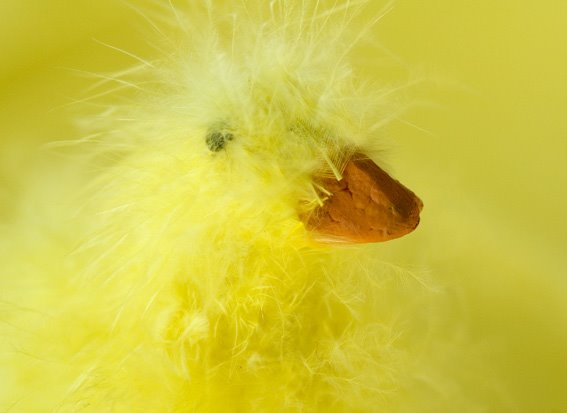
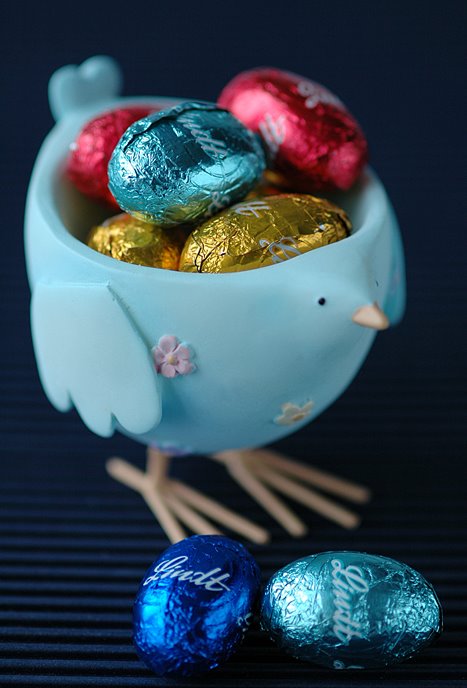
Easter chick. Who are you calling ugly?

Sunday, March 26, 2006

Marmalade - Part 2 ... and Dundee Cake


This posting is dedicated to my mum on Mother's Day - with lots of love.


Over the course of the 17th century the method used for producing quince marmalade was applied to other fruit, including oranges. The oranges available in Britain at this were bitter not sweet, so the combination of fruit and sugar was a good one. The earliest orange marmalades were therefore not dissimilar to the quince marmelada that I made in my previous posting.

Another fruit popular for preserves during the 17th century was the pippin (apples raised from a pip). Pippins are naturally high in pectin (as is the quince), so it was an easy fruit to work with. Although they too could be made into a set paste and boxed, they were generally made into a jelly of a beautiful golden translucency and presented in a glass to show off the colour. The pippin jelly was delicately flavoured and 17th century tastes preferred something stronger, and so additional fruit was added in the form of candied lemon or orange peel, or even whole fruit. The golden jelly held the fruit in suspended animation that looked pretty impressive, and so was a nifty number to serve to guests as part of your dessert course. The combination of pippin jelly with orange peel proved to be a popular one.

When Charles II's court returned from exile in France, they brought to England a small linguistic shift in fruit preserve terminology. In France preserved quinces were made into something that had a jellied consistency and that was potted not boxed. The French name for this was 'marmelade de coings'. The Restoration court (and therefore fashionable society) were thus in the habit of referring to this jellied substance as a 'marmalade', and so the name began to be applied to fruit preserves that did not necessarily match the appearance of the Portuguese marmelada. Fashions being what they are, the older forms of marmalade began to look old hat, and a new form of marmalade started to emerge.

At some point towards the end of the 17th century a cunning (but unknown) British housewife devised a method of producing a jellied preserve from bitter Seville oranges alone (no need for the addition of pippins). The first orange marmalades of this type were still much thicker than those served today, but they would have been potted, not boxed, and eaten with a spoon, not cut with a knife. The method of making the marmalade involved boiling the peel and pulp with sugar, and then pounding the softened fruit with in a mortar. Very labourious work. Eventually a second method evolved in which the peel was boiled separately to soften it, and then the peel was boiled again along with sugar, juice and pulp. The result was a opaque jelly with peel suspended in it. In Scotland the slices of peel within orange marmalade were known as
'chips' and so the preserve there often went under the name 'chip marmalade'.

There is a myth that Mary Queen of Scots introduced marmalade to Scotland, but I think this is down to the infamous pun derived from marrying her name to marmelada. Mary was seasick on the journey from France to Scotland, and is supposed to have asked for "marmelade pour Marie est malade" (quince marmalade was thought to be good for settling stomachs). It is possible that Mary help popularise French food tastes within Scotland, and that a consignment of marmelada travelled with her from France, but it was already known in Scotland before her arrival.

It was harder for Scottish housewives to obtain quinces, but there were plenty of other fruits available locally for preserve making. Oranges were imported into Scotland from the end of the 15th century. Three sugar boiling houses were established in Scotland between 1667 and 1701. Raw sugar was imported alongside the oranges, and so the two ingredients needed for orange marmalade making in Scotland were readily available by the end of the 1600s. It was this latter fact that led to Janet Keiller (often wrongly credited with inventing marmalade) to turning her hand to large-scale production of orange marmalade.


At an unknown date towards the end of the 17th century, Janet Keiller bought going cheap a load of oranges from a ship forced to dock in Dundee harbour due to bad weather. With sugar from her husband'’s grocery business she cannily turned the fruit into marmalade, which she then sold through Mr. Keiller's store. Janet, faced with a cargo load of oranges, chose to use the 'chip marmalade' method (slightly less work). Mrs. Keiller's marmalade proved to be a great success, and in Dundee in 1797 a full-time business was established producing marmalade, and also eventually producing jams, confectionery and Dundee cakes. The 'chip marmalade' would be known in England as 'Scotch marmalade', and eventually synonymously as 'Dundee marmalade' all thanks to the popularity of Keiller's product.

So this brings me neatly to a stopping off point for a quick bake. Keiller's quickly evolved into large-scale food producer, with the work-force and equipment to produce other goods alongside the marmalade. Dundee cake was first made by Keiller's at some point in the 19th century. They cannot take the credit for the recipe, as similar fruit cakes were made across Scotland, but they were able to produce cakes commercially which then sold across the globe as 'Dundee cake'. Dundee cakes are not so heavily fruited as some dried fruit based cakes, and the top of each cake is studded with blanched almonds. The use of almonds to decorate the cake in a distinctive way, was probably just a marketing ploy to ensure product individuality. For Keiller's cake making was also a clever way of ensuring the factory workers were kept busy when Seville oranges were out of season, and to use up any left-over peel.


Mary Queen of Scots pops up again in a legend connected to Dundee cake. The story goes that Mary didn'’t like cherries in her fruit cake, and so a Scottish baker came up with a special recipe which didn't include them (surely you just leave them out?). A 'genuine' Dundee cake should therefore not include cherries. I have to say though that in most of the recipes that I read they were included. Perhaps they were recipes devised by Mary's jealous cousin, Elizabeth I?

I followed the recipe sent to me by Eva (The Golden Shrimp). As part of her EBBP box to me she sent me key ingredients for Dundee cake -– mixed peel, raisin, sultanas, cherries (sorry Eva, I went with Mary on this one, but I'’ll find a good use for them in the near future), and a small bottle of whisky (a single malt! - I kept this for drinking with my cake, and used a more pedestrian whisky I already had). Eva's recipe was either for one large cake, or for several small ones. I decided to make miniature cakes. The recipe also included instructions for making a whisky syrup or saboyan to serve with the cakes, to turn them into a rather wonderful sounding dessert (recipe is from Gary Rhodes: At the Table).

175g butter
175g caster sugar
3 large egg, beaten
225g plain flour
1 tsp baking powder
1/2 tsp ground mixed spice
2 tbsp ground almonds
175g currants
175g sultanas
50g chopped glace cherries (if you want to)
50g chopped mixed peel
finely grated zest and juice of 1 lemon and 1 orange
3-4 tbsp whisky
50g blanched almonds to decorate

1. Preheat oven to 170C/325F/Gas 3. Prepare your cake tins. I used three small tins approx. 10cm across by 3 cm deep, and I also filled nine muffin cases.
2. Beat together the butter and sugar until light and creamy. Add the beaten eggs gradually.
3. Sift the flour, baking powder and spice into a bowl.
4. Put all the fruit, including the grated lemon and orange zest, into another bowl.
5. Fold the dry ingredients into the butter, sugar and egg mixture. Once well blended add the dried fruit. Finish off by adding the wet ingredients making damn sure you don’t leave out the whisky.
6. Spoon into the cake tins/cases, and place the almonds on top of the mixture in a decorative manner.
7. Gary suggests that small Dundee cakes will take about 25 minutes. I kept an eye on mine and found they took closer to 45.
8. After leaving the cakes to cool you can wrap them in greaseproof paper and store them in an airtight box. A large cake should be stored for a week before eating to improve the flavour. Me, I had a small cake (a wee morsel - see below) as soon as it was cool enough to get in my mouth. ABSOLUTELY DELICIOUS!


Incidentally, did you know that the Dalai Lama is very fond of Dundee cake?

Anyway, back to the marmalade tale. Keiller's success encouraged other Scottish grocer and kitchen supremo partnerships to launch rival businesses. James Robertson and his wife Marion set up their company in Paisley in 1864. Robertson's best known product is 'Golden Shred', still selling well today. Four years later, George and Margaret Baxter started their company in Morayshire. Alongside marmalade Baxters also made jams and other conserves. They are still a household name, and now produce all manner of foodstuffs. And so, with the success of these companies, and the initial commericalisation of the marmalade making process by Keillers, marmalade has a long association with Scotland which continues.

Much further south, the university town of Oxford was the site of an English firm which also had great sales success with its marmalade and other preserves. Frank Cooper and his wife (yet another grocer and talented cook combo) set up their business in 1874. Cooper's product was unique in the way that the marmalade was prepared, as after two boilings the softened orange pulp was left to mature for between 3 and 12 months. The finished marmalade was dark and contained coarse cut peel. The marmalade was enjoyed by students and dons, and visitors to the town took jars away with them. Business boomed. A large factory was built in Oxford right next to the railway station for ease of transportation. Cooper's success meant that Oxford is also forever associated with the sweet, sticky stuff. Chivers of Histon, Cambridgeshire and Wilkin & Sons of Tiptree, Essex, also put their towns on the marmalade map.

So, just one last thing to consider. Marmalade was first eaten at the end of the main evening meal as part of the range of dishes offered as dessert. The reason being was that oranges were considered comforting to the stomach; aides to digestion; and also stimulatory of warmth to the body. From Elizabethan times through to the 18th century, this continued to be the case. It was the medicinal benefits of oranges which led to the Scots first sampling marmalade as part of their first meal of the day - breakfast. The Scots had been in the habit of starting their day with a dram of whisky, followed by a bowl of ale with a toast floating in it. When tea drinking became fashionable in the early 18th century some people dropped the ale and took tea instead. Others swapped the whisky for a tot of body warming marmalade. The Presbytarians no doubt welcomed the loss of alcohol, but the Scottish breakfast evolved into a fine feast of a meal soon to be copied by those in the rest of Britain.


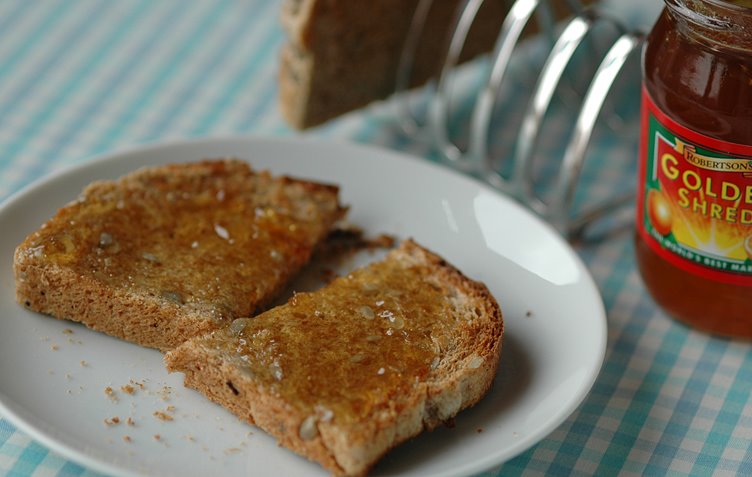
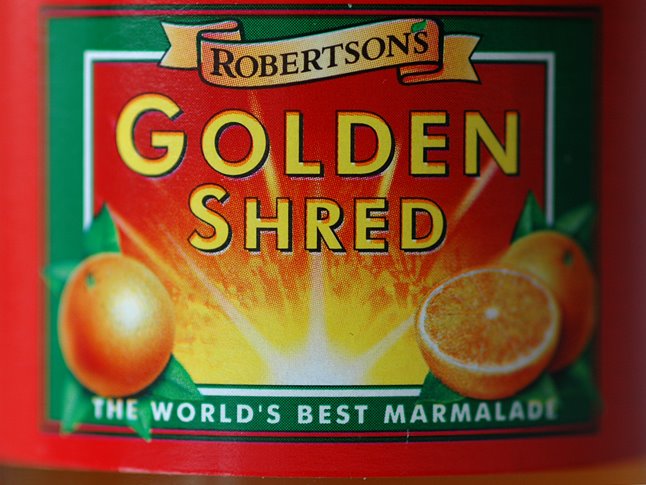
Golden Shred 'World's Best' Marmalade? To me this is reminiscent of the claim of one of our national tabloids to be 'The World's Greatest Newspaper'. I think I will leave that for you to decide...


My main source of information for both my postings on marmalade was 'The Book of Marmalade' by C. Anne Wilson. It also contains many historical recipes for marmalade, and ideas of foods to make with marmalade (cakes, trifles, pies etc.).

Saturday, March 25, 2006

EBBP4 - From Dundee to Ealing

Earlier this week I received my EBBP parcel from the lovely Eva of The Golden Shrimp. Eva had filled it with carefully chosen items, based on my own site and foodie interests.


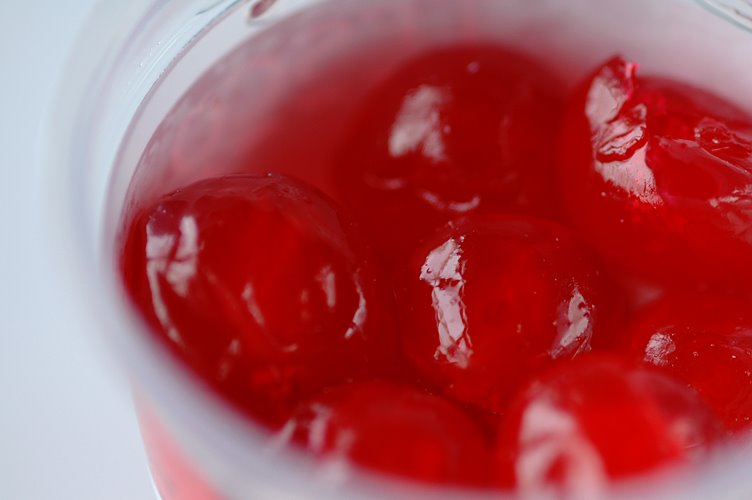
First out of the box were ingredients (mixed peel, sultanas, raisins, glace cherries, whisky) for making a Dundee cake (Eva is Dutch but lives in Dundee, Scotland). This was a fantastic idea and it fits in amazingly well with the next posting that I am working on (to be revealed shortly). Eva also sent me a recipe from which to bake. I rushed off to use the said items before I had had a chance to photograph them unopened.
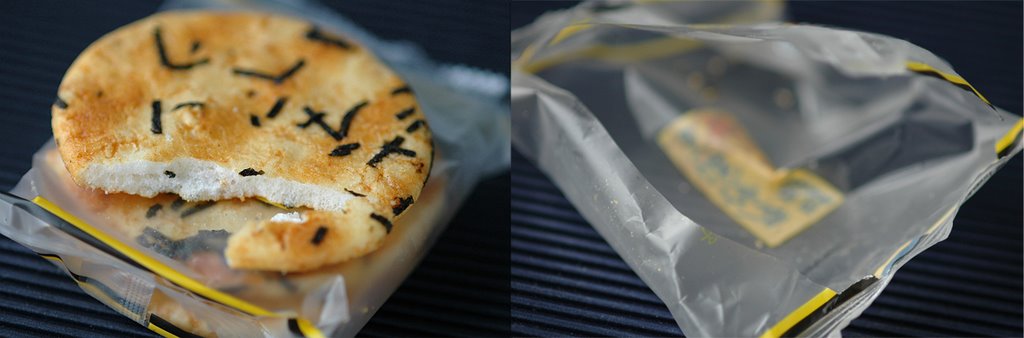
Next to be revealed were some Japanese rice crackers (we have both had the pleasure of visiting Japan):

Very tasty!

...and also dried mushroms and seaweed - ingredients for recipes supplied by Eva and hand-written for me. Thank you Eva, I will certainly be trying these out. I have always been very lazy and bought dashi granules, so this will encourage me to make my own:


Next, a mini vegetarian haggis from the esteemed makers of haggises - Macsweens. I love the meaty ones so it will be interesting to see how this compares tastewise. Another taste of Scotland from Eva:


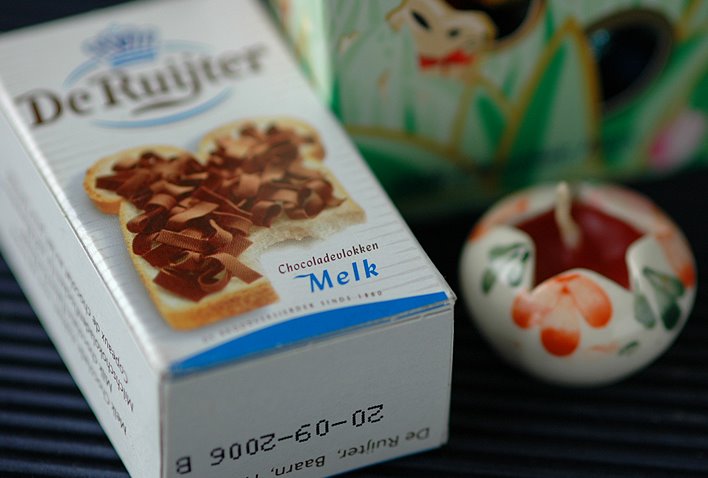
Then lastly a few sweet goodies - a box of Lindt mini Easter eggs; a box of De Ruijter chocolate sprinkles (I had these many years ago in Amsterdam, so they were a real foodie blast from the past! How nice when things like this pop up unexpectedly); and a tiny little strawberry scented candle in a ceramic holder (because as Eva says, the real fruit are not available, but it is nice to be reminded that summer is not so far off now):


These to be hidden from my husband...


Thank you so much Eva.

Thank you too to Andrew from SpittoonExtra for organising this round of EBBP.

Sunday, March 12, 2006

Marmalade - Part 1


Tangy with bitter-sweet orange; an amber jelly thick with petrified peel; beloved of good folks such as Paddington Bear (of COURSE he's a real person) and the cream of England's great explorers (Hillary took a jar to aid him in his climb of Everest, and Scott took a pot on his fateful trip to the South Pole). Marmalade is a dish that may be produced in kitchens all over Britain, although commercial production is associated with Oxford and Scotland. The fruit of popular choice is Seville orange, and seasonality dictates that home-made marmalade can only be produced during the first couple of months of the year. I had good intentions to make a batch at the end of this winter, but in the blink of an eye the Seville oranges that had come into the supermarkets all vanished. Rather than miss out altogether on my first foray into marmalade making, I decided instead to look into the history of the preserve. I soon discovered that the marmalade that was first produced in this country was quite different to that which graces today's breakfast table. I need to credit here 'The Book of Marmalade' by C. Anne Wilson, from which most of my factual information derives.

The fruit conserve that was to become known as marmalade first arrived on these shores in the 15th century courtesy of the Portuguese. Luxury foods such as sugars, dried fruits and sweet wines were all assured good sellers to the wealthier Tudor households, and it seems reasonable to think that some canny Portuguese trader thought it worthwhile to also bring over a few boxes of their local sweet marmelada, made of preserved marmelo (Portuguese for quince). Although Britain already had recipes (via the Romans) for preserving quinces in honey, these gave a wetter or more jellied result.

Marmelada was a preserve made of quince and sugar, set to a thick, jellied paste and contained in a wooden box rather than an earthenware pot. It was cut and served in slices. Marmelada still exists and is widely available in Portugal, and in Spain too where it goes under the name Membrillo.

The origins of marmelada reach away from the shores of the Iberian penisula, and toward ancient Persia. The Persians were the first people to make use of sugar as a foodstuff, and to use sugar to help preserve fruits for later consumption (the Romans and Greeks used honey as a sweetener, keeping sugar for medicinal purposes). With the expansion of the Persian Empire, and then the later conquest of Portugal and Spain by the Moors of North Africa, the early Persian method of preserving quinces using sugar was introduced to Western Europe.

C. Anne Wilson considers it likely that Portuguese marmelada was additionally flavoured with rosewater (betraying its Persian origins). It was the novelty of this flavouring that distinguished it from the quince preserves and jellies already available in Britain, and contributed to it becoming a must-eat foodstuff in Tudor England.

Tudor housewives taught themselves to make marmelada/marmalade at home, and the name became applied to the method of preserving fruit, and not just to one type of fruit. 16th century recipe books record cooking instructions for apple, pear and strawberry marmalades. Quinces were popular because they are naturally high in pectin, which means the fruit helps the marmalade to set readily.

I decided to try my hand at this earliest form of marmalade, working from a recipe transcribed by Hilary Spurling from 'Elinor Fettiplace's Receipt Book', which dates from the first few years of the 17th century. Lady Elinor's recipe book found its way down the family tree to Hilary. She has tested each of the recipes, and in her book gives both the original wording and her modern interpretation (book first published by Penguin in 1986). I bought the book in a charity shop and it is a real treasured find.

Lady Elinor's recipe gives instructions for either white or red quince marmalade. White marmalade is made by only cooking the quinces for a short time, boiling them fast so that the quinces don't darken to a deep red. I decided to go for the darker ruby red marmalade, although achieve this you do need to have a lot of time of your hands (7 -8 hours). If you really want to impress, make both, cut up and box checkerboard fashion.

Ingredients:

I used two quinces, caster sugar, and water. Simple. Read below for quantities.
I boxed my marmalade into a wooden Turkish Delight box, having first consumed all the contents with indecent haste. I lined the box base and sides with greaseproof paper to preventing the marmalade from sticking to the wood.

1. Stew the whole quinces using just enough water to cover them. This will take about an hour. They are ready when the skin tears readily when prodded with a spoon handle. Remove the fruit from the water, but don't discard.
2. Let the fruit cool a little, and when you can manage it, peel, core and slice them. Now weigh them and weigh out an equal amount of sugar.
3. Return the sliced fruit to the pan of water used to stew them, and add the sugar.
4. Put the pan over a very low heat, cover, and leave for six to seven hours for the water to reduce and the quinces to darken deliciously.


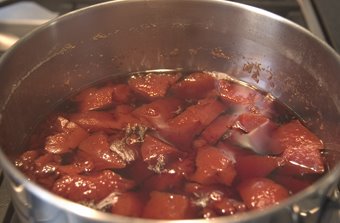
After two and a half hours my quinces had taken on a more rosey hue.


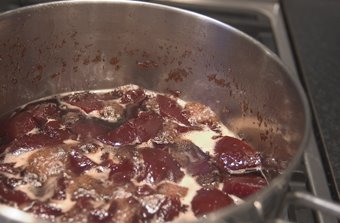
An hour and a half later, the sugared water is reducing, but the quinces haven't darkened noticeably.

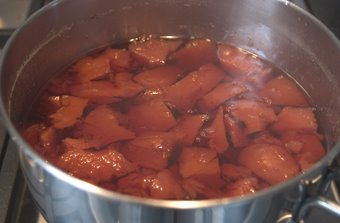
After six hours the quinces have turned a luscious plum port colour.


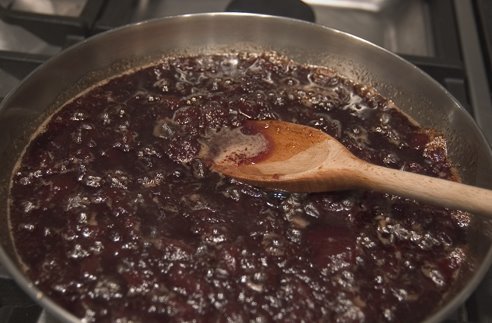
During the final half hour transfer the fruit to a pan with a larger base for maximum heat blitzing, the quince darkens further, and the mixture starts to gel. Stop boiling when the mixture starts to pull away from the sides of the pan.


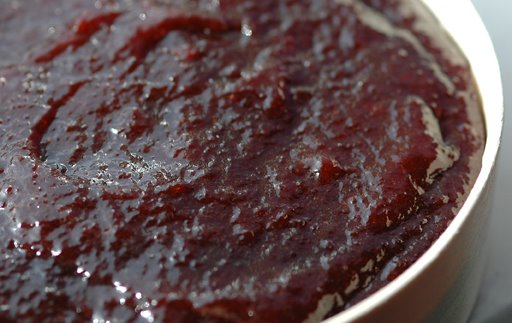
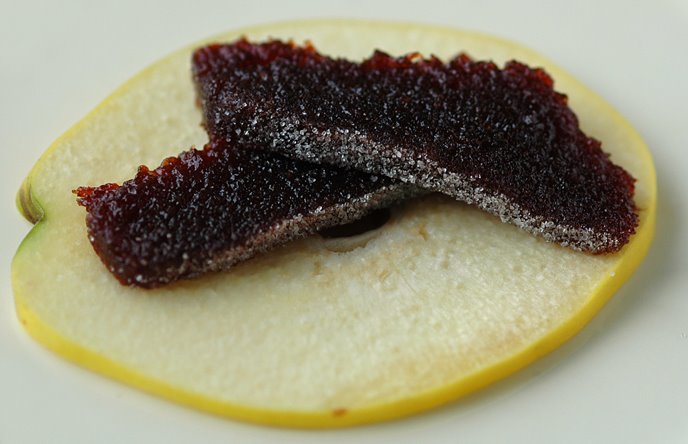
At this final stage you need to be ready to get your quince paste sieved and into the waiting box pretty speedily. I sieved mine into a bowl, and as soon as the fruit hit the cold surface it began to set. Perhaps warming the bowl first would help? Once sieved transfer into your marmalade box and admire the beauty of its red-black gleaming density.


This marmalade is much darker and heavier in consistency than Portuguese marmelada and Spanish membrillo. The flavour is pretty much the same but the sensation in the mouth is quite different. It cuts easily into slices, and has a robust graininess. I dusted my marmalade with sugar prior to slicing. When the preserve was produced in 16th and 17th century Britain, it was served in delicate slices at the end of a meal, as part of the dessert course. What a fine ending to a dinner.


Not a serving suggestion - raw quince is not recommended! But what an amazing transformation of colour.

More marmalade history to follow...

Friday, February 10, 2006

Cornish Fairing biscuits


Cornwall has quite a list of intriguing sounding foodstuffs:

Licky Pasty (leek pasty)
Star Gazy Pie (pie made with herring, mackerel or pilchards)
Figgy 'Obbin (suet pudding with raisins - figs are the Cornish name for raisins)
Heavy Cake (a pastry-lie cake with dried fruit)
Mahogany (a mixture of black treacle and gin! Drunk by sailors to put hairs on their chests - I expect)

Cornish Fairings I had made (& enjoyed) in the past, but I had never considered the meaning of their name. A 'fairing' is basically any item bought as a gift at a fair. This could be an edible item or a more lasting memento.

Every old town or country fair in England had a different food associated with it, often a type of gingerbread, a long-lasting heritage deriving from the Medieval love of spices. In Hampshire you could buy a Gingerbread Husband. These little fellows were pressed into a wooden mould to form their shape, and then gilded. If I can ever find a Gingerbread Husband mould I will be making up a whole batch of husbands (at least you can eat them if they get tiresome). Bath Fair sold Gingerbread Valentines (perhaps to give to your Gingerbread Husband).

Cornish Fairings are also a spiced biscuit. They have a success beyond their fleeting appearance at the local fair, and have been produced commercially for over a hundred years by a firm called Furniss based in Truro (established in 1886).* Click here for a related story for cat lovers.

I have always had a romantic view of these traditional fairs - seeing them in a Thomas Hardy-esque light. Many British fairs that still make an annual appearance are the great-great-great etc. grandchildren of Medieval fairs. Their ancient relations were either Charter or Hiring Fairs.

Charter Fairs were a venue for the sale of horses, cattle and other livestock. The name comes from the fact that these fairs were licensed by a grant or charter from the monarch. The local landowner or parish council held the charter that was a source of income for the king. Fairs were usually held on a Saint's day or feast day, so they became not only a chance to sell your cow, but to meet up with old friends and have a bit of a jolly.

Hiring Fairs originated for more sober reasons. In the mid 14th century a terrible plague ravaged Britain (The Black Death) and killed many thousands (and quite possibly 2 million people in total), which meant that any healthy, fit individuals able to still carry out manual labour could expect to command a premium wage. Therefore in 1351 was introduced a Statue of Labourers Act, which set a limit on the days that workers could be hired, and also tried to enforce wages to return to pre-plague levels. Statute (Hiring) Fairs were held quarterly with the intention of stabilising the labour market.

The annual fair in the Gloucestershire town of Tewkesbury, near to where I grew up, is the descendent of a Medieval Hiring Fair. Round those parts, and across the Midlands, such fairs were often known as Mop Fairs due to the fact that women wishing to be hired would bring a tool to hold to symbolise their trade. The Mop Fair in Tewkesbury is still held on or near-to, the same dates each year, the 9th and 10th of October - dates which link it also to the celebration of Old Michaelmas Day.

But enough history, and on with the baking. My recipe for Cornish Fairings comes from Linda Collister's 'Baking Bible'. The recipe is very straightforward, and the only step I didn't follow was to add in mixed peel (didn't have any to hand, and I don't think it is an essential ingredient, as none of the other recipes I read used it). Linda attributes the cracked surface of the biscuits to the combination of baking powder and bicarbonate of soda - more on this later.

100g plain flour
pinch of salt
1 teaspoon baking powder
1/2 teaspoon bicarbonate of soda
1 teaspoon ground ginger
1/2 teaspoon mixed spice
40g golden caster sugar
50g unsalted butter, chilled and diced
1 tablespoon of mixed peel, very finely chopped
3 tablespoons of golden syrup (in cold weather, warm the syrup before adding to mix)


1. Preheat oven to 200C/400F/Gas 6. Prepare a couple of baking sheets.
2. Sift the flour, salt, baking powder, bicarbonate of soda, ginger and mixed spice into a larger bowl.
3. Stir in the sugar.
4. Add the diced butter and rub in until the mixture resembles fine breadcrumbs.
5. Stir in the mixed peel, and then the syrup.
6. Using your hands, roll the dough into about 20 marble-sized balls (I found mine were quite large 'marbles' ). Space them well apart on the baking sheets.
7. Bake in oven for about 7 minutes or until golden.

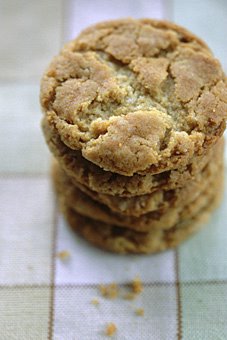
I watched my marble balls slowly sink down onto the baking sheet, as if descending into a curtsy, before completely prostrating themselves before my gaze. Perhaps my little dough discs grew shy or obstinate, for they remained resolutely of a piece and crack-free.


I double-checked the 'use-by' dates on my raising agents - well within. Both my baking powder and bicarbonate of soda were stored in dry conditions, and the baking instructions followed as I had followed them before. Mysterious. Not that this lack of cracking effected the flavour, but the texture of the biscuits was distinctly more chewy and less snappy then earlier batches. So, it is at this point I have to confess that I remembered I had photographed an earlier set of Cornish Fairings that I had made, and I thought that I would insert the images into this posting so that you can see that the 'ones that I made earlier' are how the biscuits are supposed to look.


Perhaps someone out there knows the answer? All suggestions received with great interest. One other recipe I read suggested that you SLAM the baking tray down on a worktop after taking the biscuits from the oven. Not sure that that would have made a difference. Another recipe suggested moving the biscuits from a top to a bottom shelf during the course of the baking time. However, previously I have followed Linda's recipe without any problems. She does mention as a tip warming the syrup in cold weather - which I didn't do - so maybe this had a bearing?


In the meantime, I found that the biscuits went down well with a cup of tea, and even better broken up and strewn over a bowl of Cornish Clotted Cream icecream. It is nice to know that in the world of baking there is rarely any wastage.

Sunday, January 29, 2006

Custard Tarts


My inspiration for this round of baking came from a trip to Portugal. I was lucky enough to spend five days in Lisbon over Christmas. One of the food highlights was getting my teeth into Portugal's pasteis de nata, something I had long anticipated! Pasteis de nata are sweet, creamy, cinnamon dusted custard tarts in flakey pastry cases. They are extremely delicious (as you may well imagine), and went down a treat when taken with a cup of bica (espresso strength coffee).

Click here for a link to the website of the famous bakery in Belem, Lisbon, who claim to still produce their custard tarts according to the original ancient recipe (first produced in the nearby Jeronimos monastery).

Many Portuguese pastries and sweets are based on the ingredients sugar and eggs, and some contain only these. The Moors were responsible for bringing sugar cane to Portugal (to keep them sweet whilst in occupation for 500 years). The nuns of post-Moorish Portugal are credited for blending sugar with egg yolks aplenty, and thereby inventing the myriad of golden doces conventvais (conventual sweets). Why so? Well, convents tended to be pretty well-off. They took the excess daughters of the wealthy (cheaper than marrying them off), and these women brought 'dowries' with them to the convent which included plenty of chickens. Lots of chicken = lots of eggs. The egg whites were possibly used either for clarifying wines, or for starching habits. The yolks were used up by making delicious sweets which were sold to raise further funds for the convent. For these nuns life was sweet.

As befits a country with many traditional foods based on eggs, milk and cream, custard tarts are a fixture of nearly all British cake shops and bakeries (sometimes very good, and sometimes a crime in the name of custard). Inspired by the scrumptiousness of Portuguese tarts I thought I would look into our own British version, and treat myself to a home-made tart or two.

Custard tarts have a long history in Britain, and were served at the Medieval table where they were know as doucets or darioles. Henry IV had a doucet at his coronation banquet in 1399. Doucets could include meat ingredients such as pork mince or beef marrow, but they were always filled with a sweet custard. The Medieval cook may have used almond milk instead of cow's milk. Almond milk was a rather expensive alternative, but suited the wealthy whom consumed it on 'fast' days, when rich dairy products were not permitted. Almond milk was an infusion of blanched, ground almonds and either syrup, water, or water and wine. There is a recipe for doucet in Jane Grigson's English Food

Incidentally the name 'custard' reveals something of its special relationship with pastry. The word is derived from both the old French for crust (crouste), and the Anglo-Norman 'crustarde', which meant a tart or pie with a crust. The egg and milk binding used for many a tart became interlinked with these words.

Traditional Foods of Britain, assigns East Anglia as the main region associated with the production of custard tarts. Laura Mason has linked a number of rich custard recipes with the Cambridge and Norfolk areas. A relative of the custard tart, Cambridge Burnt Cream (now more commonly know by the French name of Creme Brulee), is supposed to have originated at one of Cambridge's academic institutions. Lucky students. No wonder some of them take such a long time to graduate.

Other British sweets such as bread and butter pudding, also owe a debt to custard. What is bread and butter pudding but slices of bread baked in custard? Where would a trifle be without a layer of creamy cold custard? And let's not forget the joy of pouring warm custard over a slice of sweet and sharp apple pie?

I decided to try a Medieval(ish) recipe. I purchased from Oxfam one week after Christmas a pristine copy of Maggie Black's Medieval Cookbook - which just goes to show that if you give your unwanted Christmas presents to charity, they do end up with someone who wants them. I say Medieval-ish because tarts and pies at this time were generally baked in pastry coffins/cofyns/coffyns, which were hand-built pastry cases and free of a supporting metal tin. Ivor Day's amazing historic food site shows a good example of custard tarts in coffins, and other free-form pie cases. I was a bit concerned about combining free-flowing custard with a not very well formed free-form tart case, so I decided to stick to my new-fangled tart tins.

(Ingredients are approximately 2/3 of the quantities given in the book, as I wanted to make small individual tarts, not one large one. I have adapted the method for preparing small tarts.)

pinch of saffron strands ground in mortar, then soaked in 1 1/2 tablespoons of warm water
4 egg yolks
235ml double cream
85ml milk
45g white sugar
pinch salt
sweet shortcrust pastry

1. Pre-heat the oven to 200C/400F/Gas mark 6.
2. Roll out pastry and use to line small tins. I did a variety of sizes but all roughly 3-4 inches wide.
3. Prick, fill with baking beans and pop into oven for about 15 minutes to bake 'blind'. Keep an eye on so that the pastry doesn't colour and burn.
4. In the meantime mix up your custard. This recipe doesn't call for you to heat the custard whilst you mix it, all ingredients are whisked together cold. First beat the eggs yolks lightly, then add the cream, milk, sugar, saffron water and salt. Simple.
5. Take tart cases out of oven, tip/pick the baking beans out. Turn the oven down to 160C/325F/Gas mark 3.
6. Pour custard into tart cases and return to oven. I let mine bake for 25 minutes. You want the custard to be just set as it will continue to cook after the tart is removed from the oven.

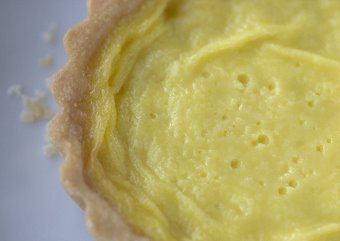
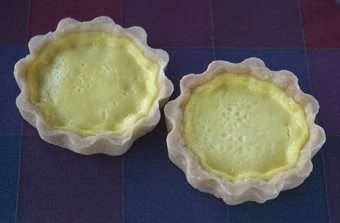
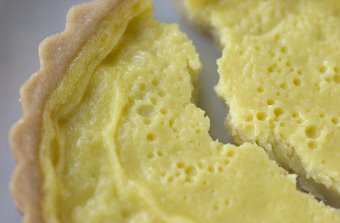
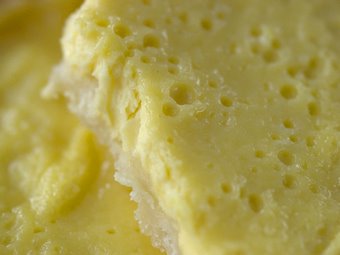
When the tarts first came out of the oven they were a frightening sight. The custard mixture was quite frothy when it went into the cases, and the hot custard puffed up in the oven. Fortunately as the tarts cooled the custard settled, leaving a ripple effect and some attractive bubbles.


Thanks to the saffron and the yolks the custard was a beautifully cheerful golden-yellow colour.


Although the custard formed a fairly shallow layer in the tartlet case, and the custard was not as sweet as the Portuguese tarts, blimey, were these boys rich! As a treat with a cup of strong (bitter) coffee one tart was a delicious morsel. As part of a four-course Medieval banquet, well, I may have had to pass on the boar's head to keep room for a slice of doucet.